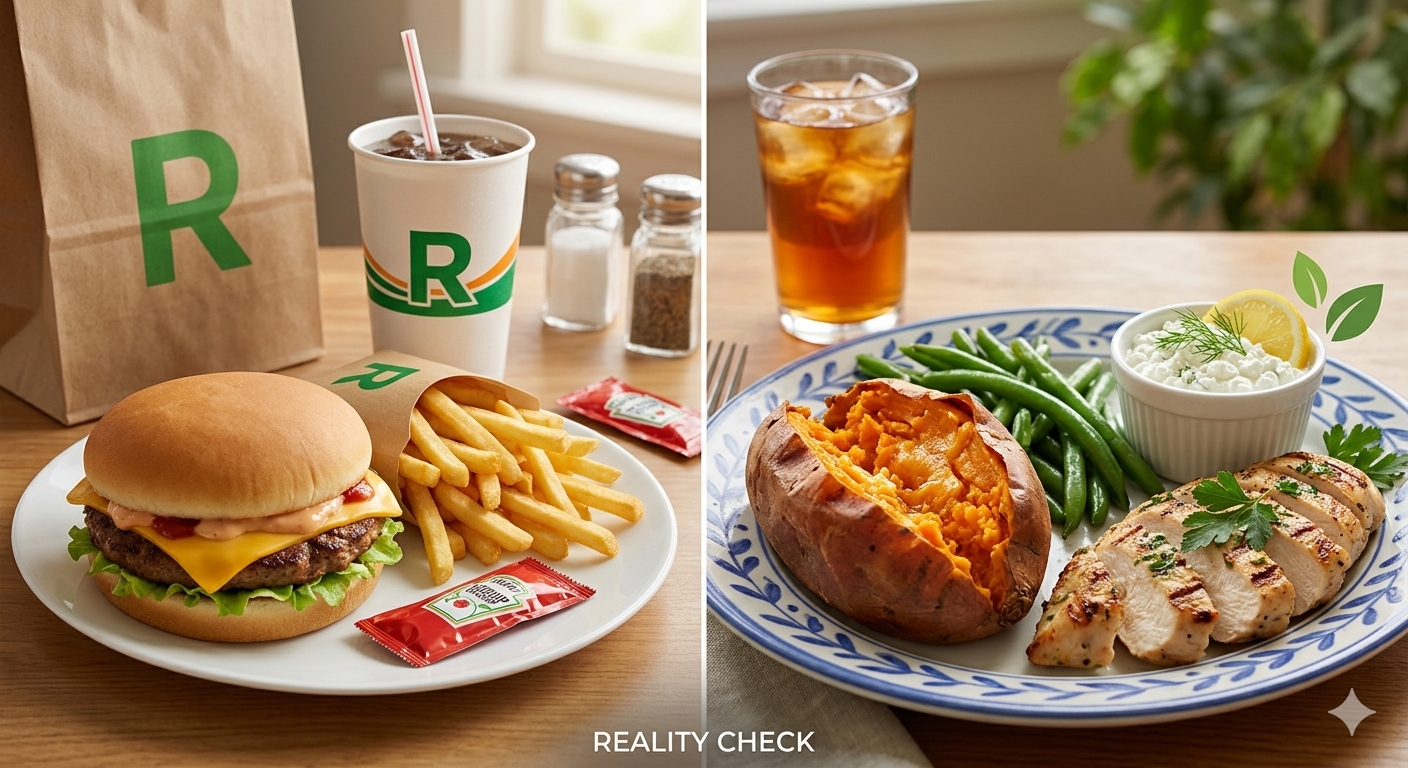
The Calorie Reality Check:
- Left Panel (Fast Food Meal): Approximately 1,140 Calories (Double cheeseburger, medium fries, and a regular soft drink).
- Right Panel (Natural Food Dinner): Just 495 Calories (Grilled chicken breast, whole sweet potato, green beans, cottage cheese, and unsweetened iced tea).
What does the average working American actually eat each day? Because of exhausting shift hours, stressful routines, and the endless convenience trap, the standard daily diet heavily relies on fast food, ultra-processed packages, and refined sugars.
Let’s look at a realistic day in the standard American convenience routine and stack it face-to-face against a 1,500-calorie natural food day. The visual and physical differences are eye-opening.
A Day in the Convenience Routine
- Morning: A large commercial flavored iced latte and a factory-wrapped blueberry muffin from the drive-thru window.
- Lunch: A fast-food combo meal consisting of a standard double cheeseburger, a medium order of French fries, and a soda.
- Afternoon Slump: A vending machine bag of potato chips or a candy bar to bridge the gap until clock-out time.
- Evening: Three slices of delivery pepperoni pizza and a couple of sodas while relaxing on the couch.
The Reality Behind the Fast-Food Day
When you run the nutritional math on that standard convenience day, it hits like a freight train:
- Total Energy: Over 3,200 calories.
- The Protein Deficiency: Barely 70 grams of protein, mostly coming from processed, low-quality meats.
- The Sodium Spike: Over 4,800 mg of sodium—more than double the daily recommended limit, leading directly to joint inflammation and elevated blood pressure.
- The Hunger Paradox: Because this entire layout is stripped of natural fiber, it spikes your blood sugar and causes a rapid insulin crash. Even though you consumed double your necessary energy, you wake up the next morning starving, sluggish, and hunting for more junk.
The Whole Food Contrast: Platefuls of Nutrition
Now, look at a 1,500-calorie natural food routine. For that exact same caloric footprint, your plates are physically overflowing. You get to eat a full berry smoothie, a bowl of fruit-and-nut oatmeal, a two-egg cheese omelet, grilled chicken breast with a cup and a half of steamed green beans, a massive garden salad bowl with a whole baked sweet potato, and a late-night cup of fresh raspberries.
| Dietary Feature | Standard American Convenience Day | Natural Whole Food Blueprint |
|---|---|---|
| Total Calories | 3,200 kcal | 1,453 kcal |
| Physical Volume | Small boxes, paper bags, high density | Multiple overflowing plates and bowls |
| Daily Protein | 70 g (Low quality) | 100 g (Clean, whole food) |
| Daily Sodium | 4,800 mg (Dangerous) | 946 mg (Heart-healthy) |
| Daily Fiber | Under 12 g (Digestive standstill) | 36.3 g (Optimal gut health) |
| Financial Cost | $30 – $40 per day | $12 – $15 per day |
The Financial and Health Dividend
Choosing natural food is a complete shift in perspective. Eating processed convenience items means you pay premium prices ($15 to $25 per takeout run) to starve your cells, bloat your body, and exhaust your joints.
By switching to natural whole foods, you buy back your wallet and your health simultaneously.
You get to eat massive, satisfying volumes of delicious food all day long while consistently dropping weight. Invest in real food—it pays the highest dividends.