Let’s be completely honest: switching to a 100% natural whole-food routine is a lot of work. It demands more time, more planning, and far more thought than simply pulling up to a window and grabbing whatever processed junk is handed to you in a paper bag.
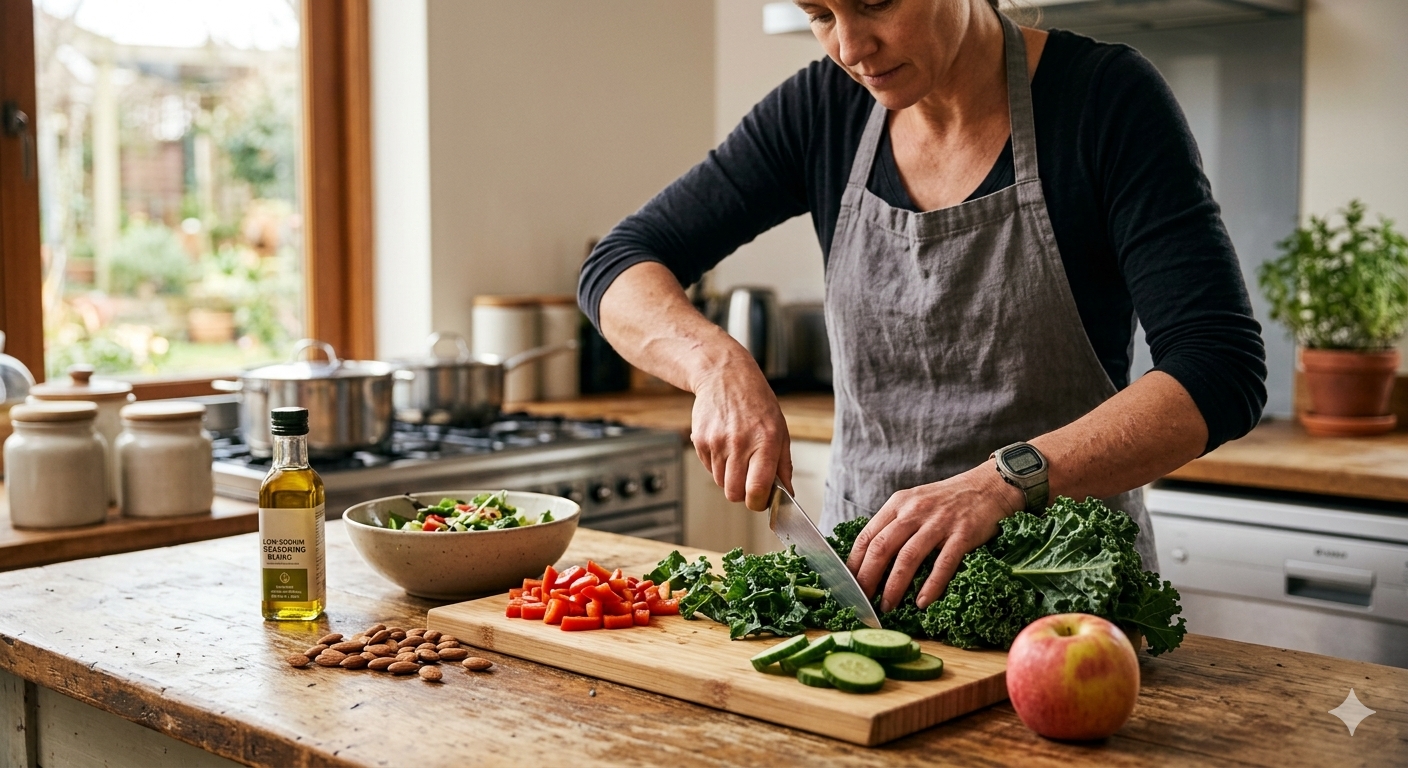
If you want to eat clean, you have to stand at a counter and chop fresh vegetables for stir-fries or salads. You have to slice up whole fruits, portion out raw ingredients, and manually trim, season, and cook your own lean meats.
It is a tough routine to maintain. But when you look closer at the reality of that effort, you realize something incredible: The work itself pays an immediate health dividend.
The Drive-Thru vs. The Cutting Board
Think about the physical reality of convenience food. When you cave to a fast-food craving, your “effort” consists of sitting completely still in a car seat, idling in a long drive-thru line, and burning virtually zero energy. You are passive, sedentary, and paying a premium price to consume empty calories that stall your progress.
Now, look at what happens when you step into your kitchen to prepare a real, whole-food blueprint:
- Active Kitchen Prep: Standing at a counter, reaching for ingredients, chopping thick sweet potatoes, slicing crisp celery, and dicing fresh tomatoes is active, physical labor.
- The Calorie Burn Illusion: You are actually burning significantly more calories washing, prepping, and stove-cooking a clean meal than you ever would driving to a fast-food joint. Scientists call this NEAT (Non-Exercise Activity Thermogenesis). In simple terms, NEAT is just the energy your body burns doing normal, daily physical movements that aren’t a formal workout. Kitchen work is the perfect low-impact NEAT routine. It keeps your body moving, your muscles engaged, and your metabolic rate ticking upward before you even take a single bite.
Maximizing the Benefits of the Prep Routine
When you reframe kitchen work as an active investment in your body rather than a chore, everything changes:
- You Control the Inputs: When you chop your own vegetables and cook your own meats, hidden sodium-heavy commercial broths, inflammatory oils, and unnecessary sugars never make it onto your plate. You hit your strict low-sodium goals because you are the chef.
- Built-In Portion Mindfulness: Spending 15 to 20 minutes actively handling raw, colorful ingredients connects your brain to your food. You appreciate the meal more, you eat more slowly, and you trigger natural fullness signals far faster than you would inhaling a hyper-dense takeout burger.
- The Ultimate Financial Win: Yes, it takes thought. But that thought keeps your hard-earned money inside your wallet instead of dropping $15 to $25 a run on convenience items that leave you waking up hungrier the next day.
The Verdict: Embrace the Cutting Board
Natural food isn’t just about what happens when you swallow; it is about the entire active lifestyle of choosing, prepping, and honoring real food.
The next time you are standing at your counter chopping broccoli or slicing a fresh Pink Lady apple, don’t view it as a roadblock. View it as your first workout of the day. You are actively burning calories, protecting your joints through movement, and cooking your way out of a rut.
The race continues—embrace the work, maximize the dividends, and keep moving forward!