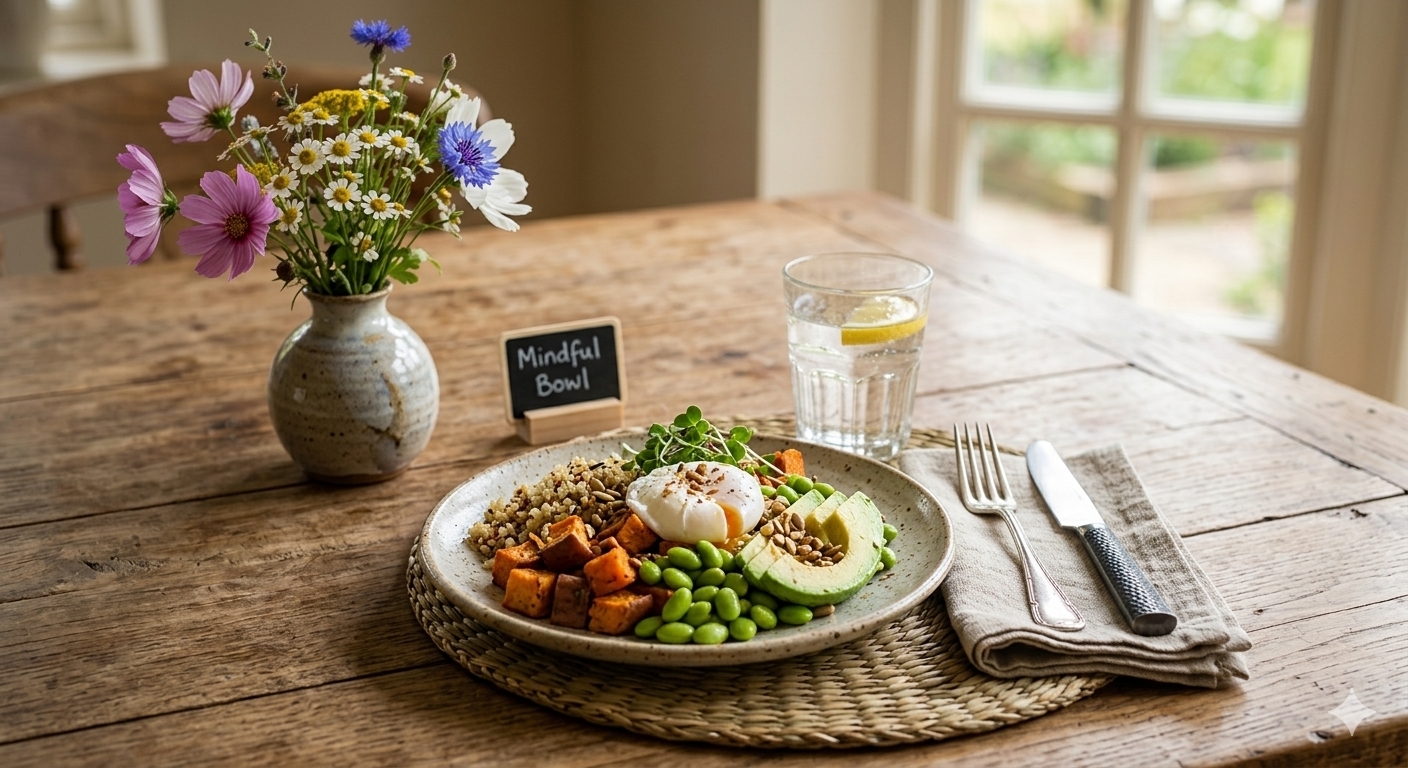
The single biggest reason people fail on a natural food diet has nothing to do with willpower. It has to do with chronic hunger. When people hear about maintaining strict limits of 1,500 calories per day, they immediately assume it means walking around starving, dreaming of your next meal.
But the reality is exactly the opposite if you build your day intentionally.
When my husband and I first started this wellness journey back in 2024, we quickly realized that cooking high-volume natural foods at home was the only way to feel truly full without overloading our systems with stadium sodium and hidden sugars. Today, I have taken that lesson and refined it into a precise, daily operational system.
The Strategy: Spacing and the “Six Eatings” Method
True metabolic control requires strategic timing. If you look at my active Daily Food Blueprint, you won’t see three massive, heavy meals. Instead, you will see six carefully planned “eatings” interspersed cleanly throughout the day.
Spacing your fuel this way stops hunger before it can ever start. By constantly re-introducing small, high-nutrient elements, your blood sugar never experiences a massive crash. When blood sugar stays level, the sudden, uncontrollable cravings for processed sweets vanish entirely.
Look at how seamlessly a full day moves when you space your nutritional slots:
- Sunrise Fuel: A clean, blended fruit and fiber smoothie to wake up your metabolism.
- First Stride: A light bowl of old-fashioned rolled oats stirred with fresh blueberries and raw crushed almonds.
- Mid-Day Charge: A protein-packed egg and egg white scramble paired with a low-fat raspberry yogurt side.
- The Pivot: Lean, leftover boiled skinless chicken leg meat paired with a generous 1.5 cups of fresh steamed green beans.
- Twilight Bite: A massive fresh salad bowl loaded with raw baby kale, spinach, and crisp garden vegetables, topped with an ounce of shredded cheddar cheese.
- Nightcap Bridge: One cup of fresh red or black grapes to satisfy your evening sweet tooth naturally.
Interspersing these clean, structured whole-food slots between your morning and evening routines turns snacks into an elite nutritional tool. It bridges the gaps effortlessly, keeping your energy completely stable from sunrise to your evening nightcap.
The Addon Pivot: Letting the Ledger Guide You
Another critical rule of sustainable whole-food tracking is flexibility based on data, not emotion. What happens when you log your entire day of healthy eating and realize you are coming up short on your daily metabolic requirements?
You do not leave your body in a severe deficit, which would only trigger a biological survival spike and intense hunger the next morning. Instead, you pivot with an intentional Addon Snack.
For instance, on a day when my core six meals left me short on my calorie targets, I purposefully added an extra slot directly to the bottom of the ledger:
- The Addon: 1/2 cup of low-fat yogurt mixed with 1/2 cup of unsweetened frozen raspberries.
This addition wasn’t an accidental slipup—it was a calculated move that delivered clean protein, digestive fiber, and vital calcium right into my totals, bringing my daily summary to a perfectly balanced 1,465 calories.
The Bottom Line
By cooking entirely at home, avoiding sodium-laden restaurant traps, spacing your meals cleanly into six balanced windows, and utilizing data-driven addon snacks, you create a lifestyle that feels abundant. You aren’t starving your body; you are feeding it strategically.
Stop counting down the minutes to your next meal. Step away from the processed boxes, fill your plate with natural volume, space your day intentionally, and live full.
Remember: eat to live, and not live to eat.